
What Is Computer Diagnostics?
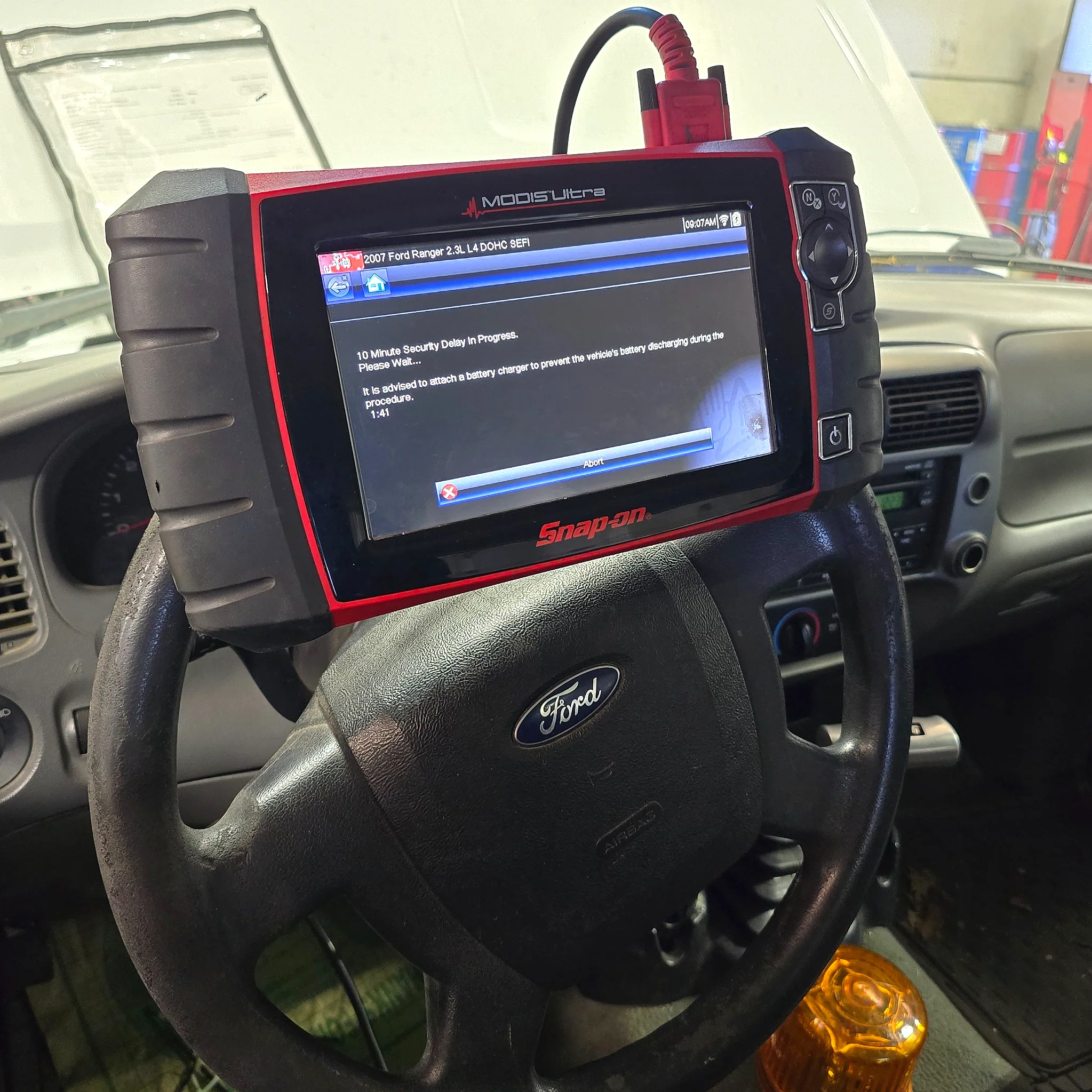
In today’s vehicles, dozens of electronic control units (ECUs) manage the engine, transmission, brakes, safety systems, body functions, and—in hybrids and EVs—battery and high-voltage systems. Computer diagnostics gives technicians controlled access to these modules so they can see what the vehicle is reporting rather than guessing from symptoms alone.
A proper diagnostic session goes beyond simply reading a code. It combines data retrieval, real-time monitoring, and verification testing to produce an accurate repair plan.
OBD-II Diagnostics: The Standardized Foundation
OBD-II (On-Board Diagnostics II) is the standardized system required on virtually all U.S. light-duty vehicles since 1996. It continuously monitors emissions-related components and powertrain functions. When sensor readings fall outside expected ranges, the system stores a diagnostic trouble code (DTC) and often illuminates the check-engine light (malfunction indicator lamp).
- Uses a universal 16-pin port and standardized code format
- Primarily focuses on emissions and engine performance
- Provides freeze-frame data showing conditions when a code set
- Serves as the entry point for most warning-light diagnostics
OBD-II is essential, but it is only one layer of modern computer diagnostics. Basic code readers that only access OBD-II data often miss issues in other systems.
Core Capabilities of Professional Computer Diagnostics
| Capability | What it does | Why it matters |
|---|---|---|
| Multi-System / All-Module Scanning | Scans engine, transmission, ABS, airbag, body control, and other modules | Catches problems a basic OBD-II scan cannot see |
| Live Data Analysis | Displays real-time sensor values (fuel trims, oxygen sensors, temperatures, etc.) | Confirms whether a code points to a failed part or another root cause |
| Pre-Purchase / Vehicle Health Scans | Full system scan before buying a used vehicle | Reveals stored codes, incomplete readiness monitors, and hidden issues |
| Bi-Directional / Active Testing | Commands components (actuators, relays, motors) to test function | Verifies whether a part is working rather than only reading data |
| Network & Communication Diagnostics | Checks CAN bus and module communication | Identifies wiring or module issues that can affect multiple systems |
| Hybrid / EV Diagnostics | Monitors battery state of health, thermal systems, and high-voltage components | Provides diagnostic insight into modern electrified vehicles |
Multi-System Scanning
A multi-system (or all-module) scan interrogates every available control unit rather than stopping at the engine. This is especially important on vehicles with ABS, stability control, transmission, or body-module faults that do not set an OBD-II emissions code. Professional scan tools can display a complete overview of which modules have stored codes and which are communicating normally.
Live Data Analysis
Stored codes show what the computer detected; live data shows what is happening right now. Technicians monitor parameters such as short- and long-term fuel trims, oxygen sensor activity, misfire counts, throttle position, and battery voltage while the vehicle is running or under load. This step frequently prevents unnecessary parts replacement by revealing the actual cause of a code.
Pre-Purchase Scans
Before buying a used vehicle, a thorough computer diagnostic can uncover stored or pending codes, incomplete readiness monitors (which may indicate that codes were recently cleared), and module communication problems. It does not replace a mechanical inspection, but it provides critical electronic insight that a visual check cannot.
Why Professional Diagnostics Differ from a Basic Code Reader
A diagnostic trouble code indicates which system reported a problem—not necessarily which part failed. An oxygen-sensor code, for example, can result from a bad sensor, an exhaust leak, wiring issues, or engine misfires. Professional computer diagnostics combine code retrieval with live data, freeze-frame information, and additional testing to identify the true root cause.
Evolving Diagnostic Standards
Vehicle diagnostics continue to evolve. Newer models are adopting OBDonUDS (SAE J1979-2) and, for electric and plug-in hybrid vehicles, ZEVonUDS (SAE J1979-3). These protocols support richer diagnostic information. Available data and testing depend on the vehicle, its electronic systems, and the scan tool. Tool and software compatibility matters when diagnosing newer vehicles.
Standards references: SAE OBDonUDS standard · SAE ZEVonUDS standard
Professional computer diagnostics gives technicians and vehicle owners a clear picture of what the vehicle is reporting. By combining OBD-II data with multi-system scanning, live data analysis, and targeted testing, shops can diagnose problems accurately, reduce unnecessary repairs, and help drivers make informed decisions.